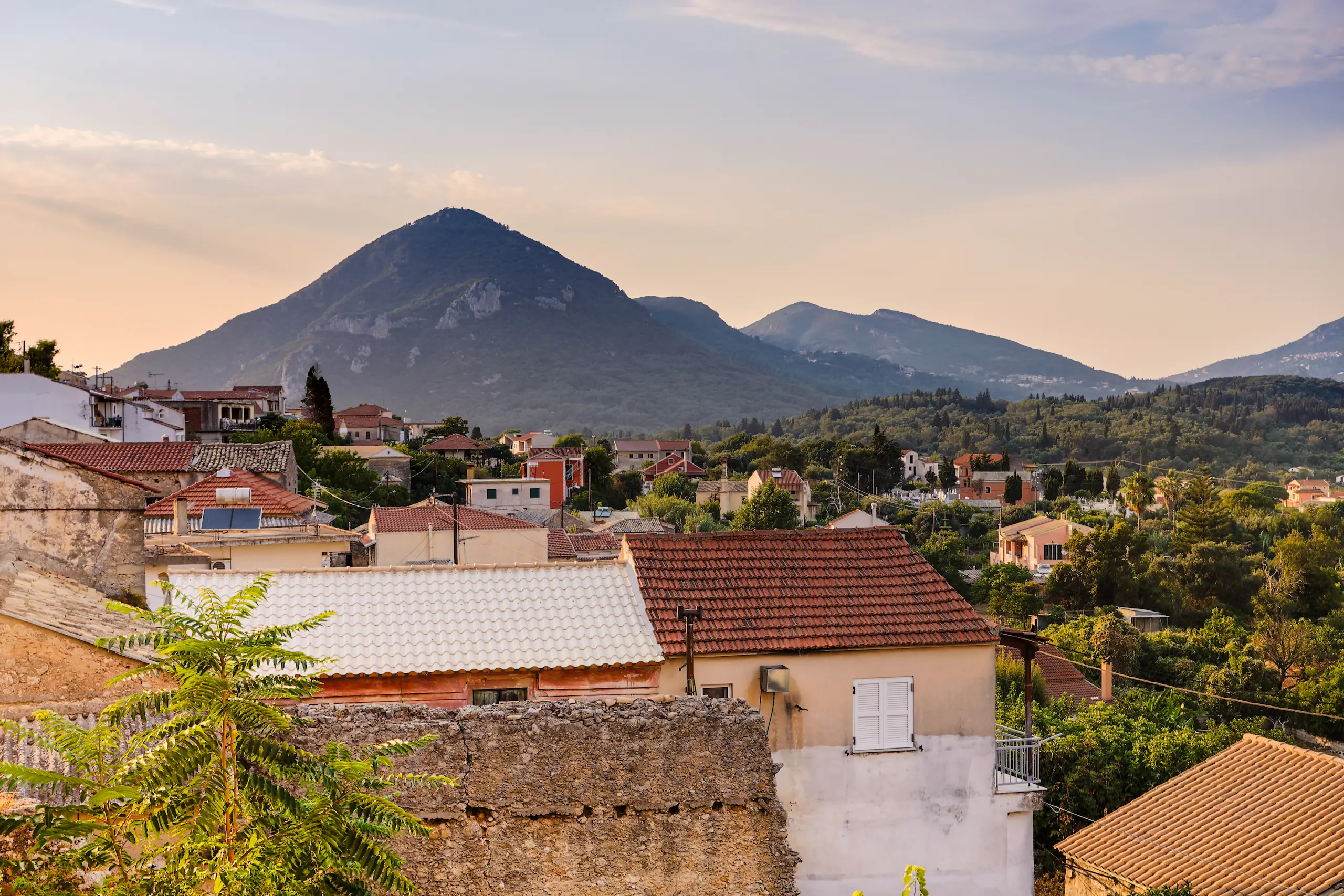
Corfu is one of the Ionian Islands — closer to Albania and Italy than mainland Greece. It has UNESCO-listed architecture, dramatic sea cliffs, turquoise coves, an abandoned ghost village on a mountain, and olive groves that stretch across the entire interior. It is absolutely worth visiting, with a few caveats.
I spent over a month based in a small village here, shooting the island end to end. Here’s the honest guide.
Getting to Corfu
From the US, you’re looking at 12–16 hours total travel time. The most common routes:
- US → Athens (direct or 1 stop) → Corfu (45-min domestic flight)
- US → London → Corfu (direct seasonal flights)
- US → Rome → Corfu
Once in Athens, you can also take a ferry from Igoumenitsa — about 1 to 1.5 hours with daily departures. Pedestrian tickets run $14–16 USD one way; if you’re bringing a car it’s $43–54. The ferry is scenic and worth doing at least one direction.
Corfu at a Glance
Porto Timoni — The Signature Shot
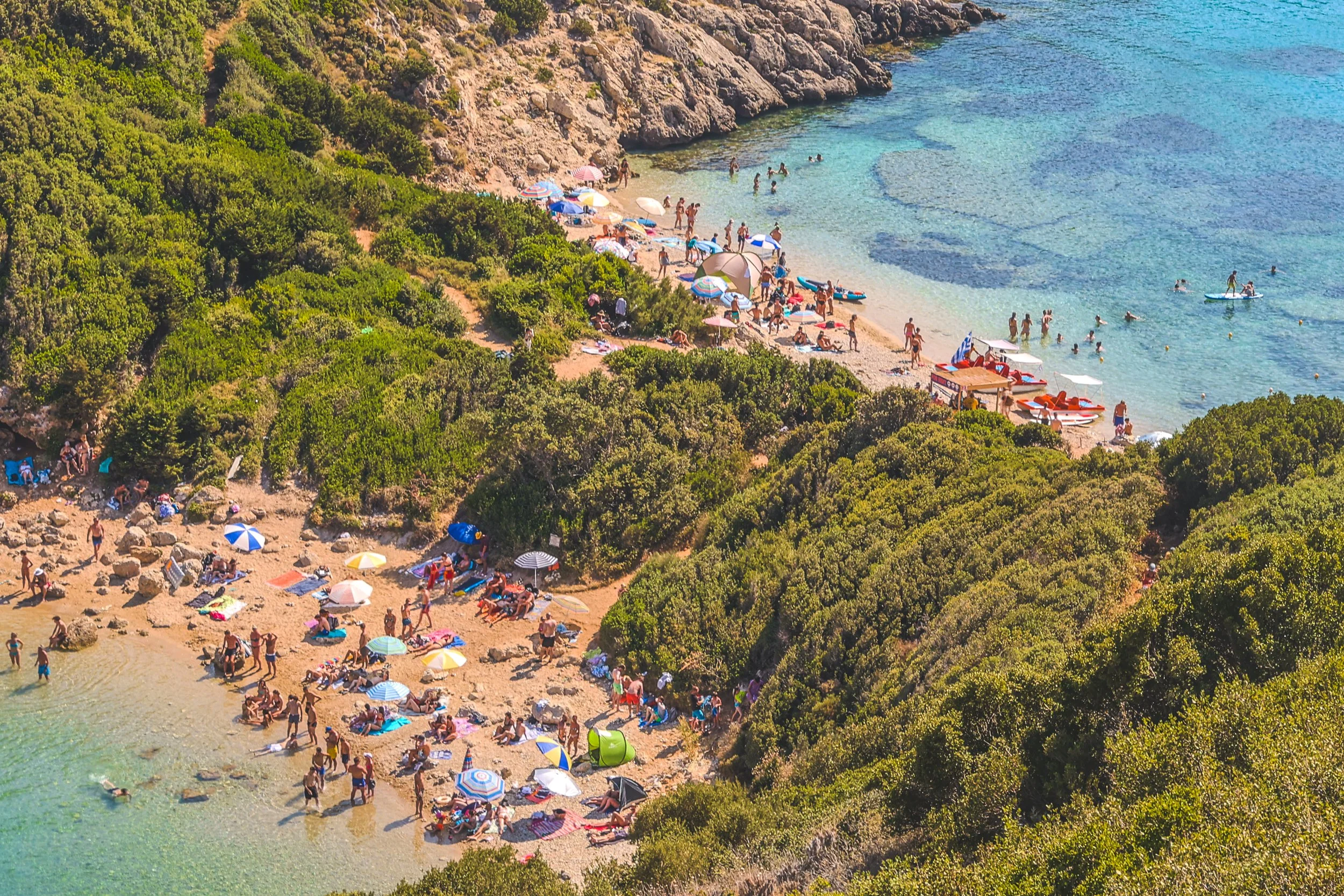
Porto Timoni is what most people come to Corfu for photographically — a double-sided coastline viewed from a ridge above, with turquoise water on both sides of a narrow promontory. To get there, you walk through a small village with local shops and food vendors, then follow a trail up to the famous midway lookout.
Go at sunset. The light hits the water from the west and the colors are extraordinary. Allow 45 minutes for the hike each direction from the village.
Corfu Old Town
This is a genuinely remarkable place — an 8th-century BC fortified city where the old walls meet beach, surrounded on multiple sides by water and backed by mountains. The architecture reflects every foreign power that ruled Corfu: Venetian, French, British. The result is layers of styles that make for compelling photography in every direction.
Walk the Liston arcades at golden hour, then head toward the Old Fortress as the crowds thin. Early morning gives you empty streets in the narrow passages behind the main promenades.
Old Peritheia — The Ghost Village
One of the most striking places I’ve photographed in Greece. Old Peritheia sits on Mount Pantokrator, 14th-century stone houses built on a hillside specifically to escape coastal pirate raids. The village was largely abandoned in the mid-1900s as residents moved to the coast for economic opportunities.
Today a handful of families have returned and there are a couple of operating tavernas in summer. But mostly it’s silence, stone, mountain views, and textures that don’t exist anywhere else. Go in spring or autumn — summer heat at altitude is intense.
Airplane Spotting at Vlacherna Monastery
This is one of those oddly photogenic things that sounds strange on paper. The main airport runway extends over the sea, and from the walkway near Vlacherna Monastery you can watch planes take off and land directly above the water — aircraft departing approximately every 5 minutes during peak season. The juxtaposition of the Byzantine monastery against the aircraft is genuinely surreal.
La Grotta Beach
A beach venue with a bar, restaurant, snorkeling, and cliff diving. Free parking is available along the main road. It’s popular and priced accordingly — I’d temper expectations on food quality, but the location itself is beautiful.
Donkey Sanctuary
Worth a visit and completely free — about 20km from Corfu Town, open 10am–5pm daily. Since 2004 the sanctuary has rescued around 500 donkeys. Donations are welcomed and appreciated.
Verdict: Yes, Corfu is worth it. The Old Town alone justifies the trip, and if you have access to a car and time to explore the north and west coast, you’ll find places that compete with anywhere in the Mediterranean.