One road in. One road out. That’s Agios Mattheos — a 16th-century village on the western coast of Corfu, built on a hillside, isolated enough to have maintained a daily rhythm that doesn’t acknowledge tourism. I spent a month there.
The photographs in this journal aren’t about the sights. They’re about what a place looks like when you stay long enough to be inside it rather than just looking at it.
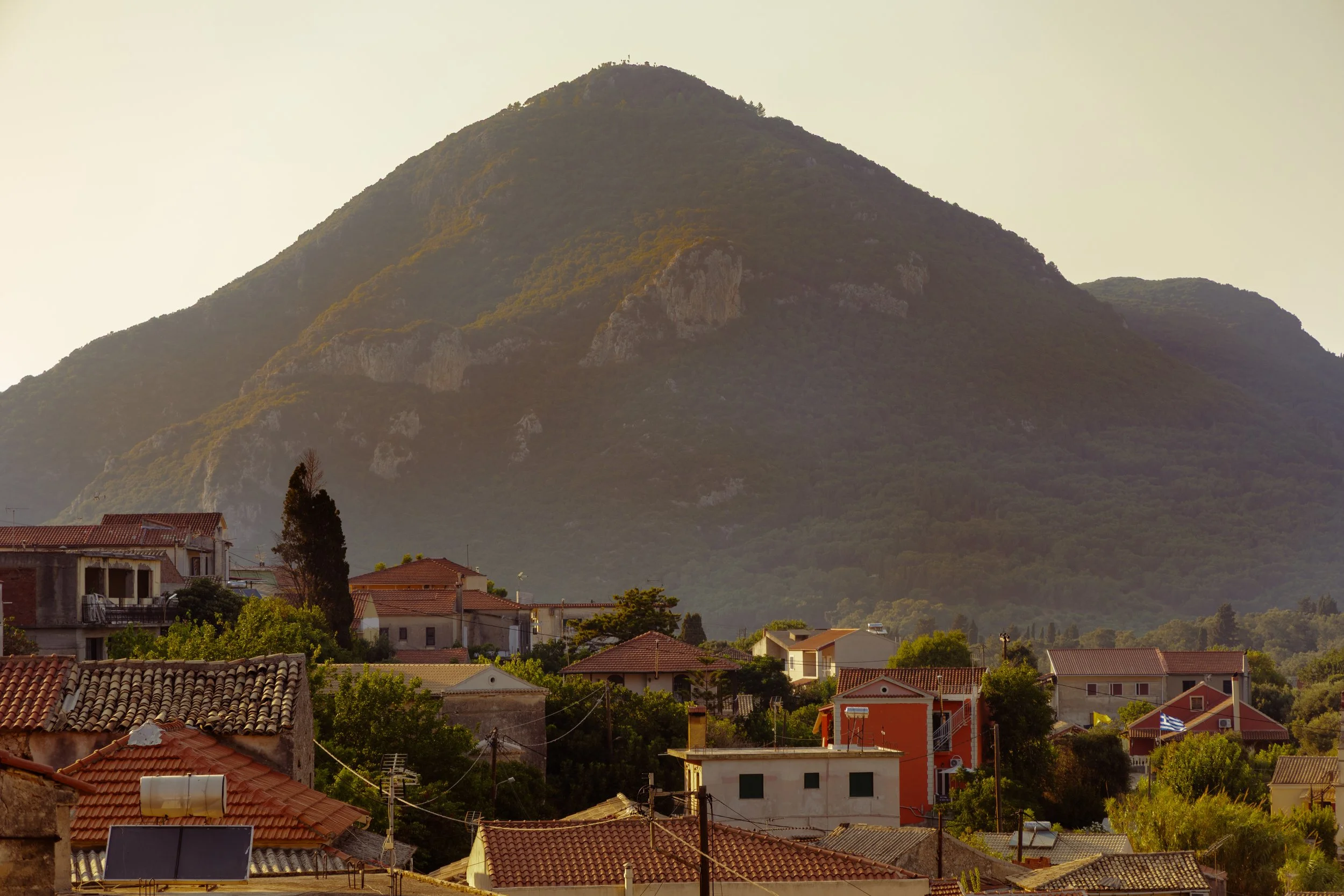
The Village
Agios Mattheos is layered — houses stacked in Venetian and Ionian style up the hillside, with narrow alleyways between them that accommodate a single person comfortably and two people not at all. In high summer heat, leaking aged air conditioners drip on your shoulders as you walk through the tightest passages.
Kids play outside in the evenings. Adults sit in the square with drinks and talk. The cathedral bells summon people from the surrounding streets. This is not a performance of village life — it is village life, running on the same rhythms it ran on a hundred years ago.
Community and Rhythm
Residents gather when the cathedral bells ring — not just for services but for community announcements, celebrations, the marking of time. The village maintains its traditions through religious festivals, marching bands, and brass orchestras. Evening activities extend late into the night: children playing football in the square while adults socialize at the outdoor café tables.
The Architecture
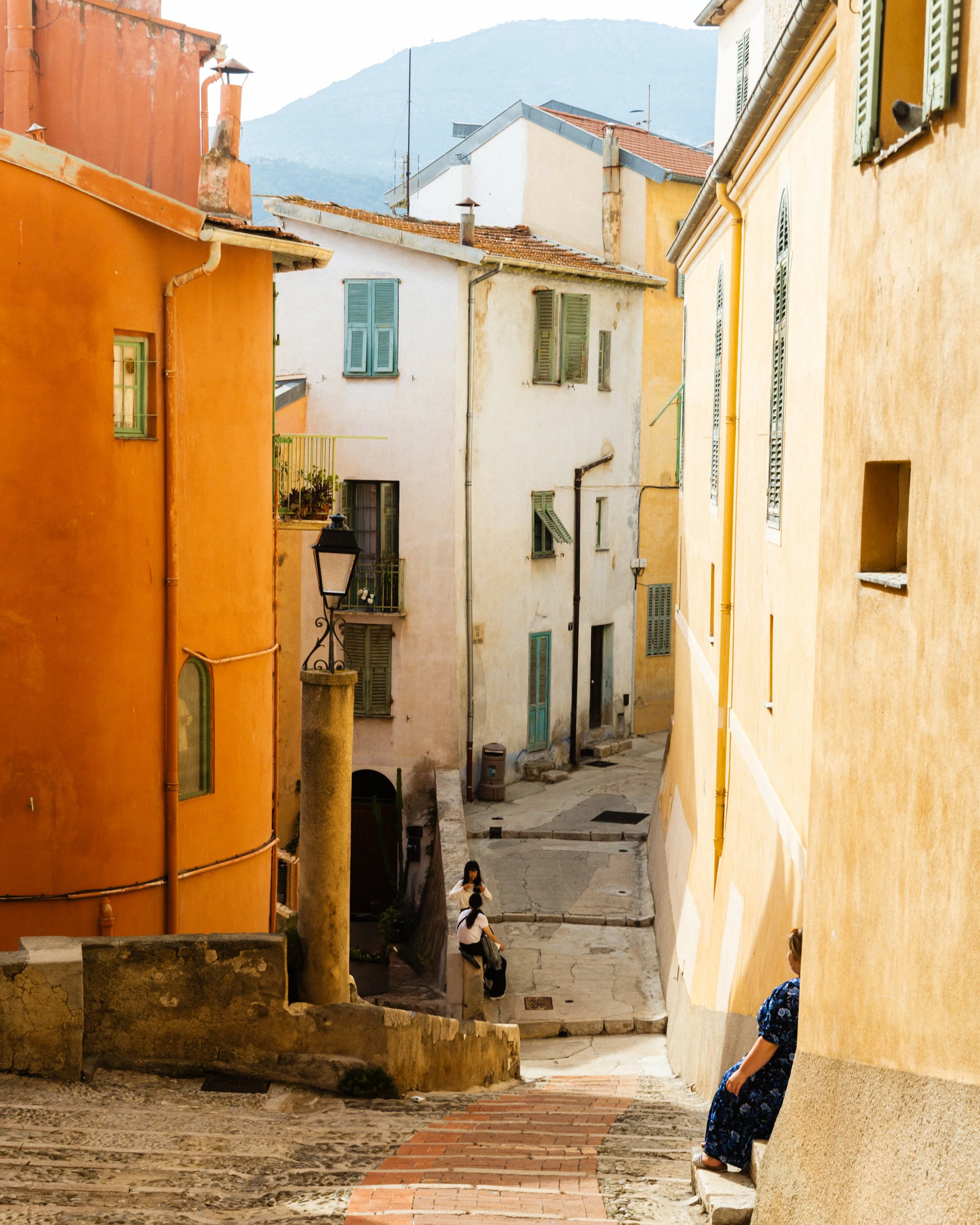
The buildings here photograph differently depending on the hour. In morning light, the pale stone walls glow warm gold. At noon they’re flat and harsh. In late afternoon, the deep shadows in the alleyways create contrast that makes even simple compositions feel cinematic. The narrow passages, the colored shutters, the potted plants on window sills — all of it reads as intentional rather than incidental.
Wildlife
The stray cat population is extraordinary — hundreds of them, many malnourished or injured. The village’s relationship with its cat population is complicated; there are efforts to manage it but the scale is overwhelming. Worth knowing before you visit: the cats are part of the visual reality here. Photographically, they add life and texture to street-level compositions.
Other wildlife: ohia snakes, Mediterranean moray eels in the sea below, and the Stone Marten — a weasel-like animal that has developed a reputation for chewing through electrical cables in parked cars. Real.
The Economic Reality
What gives the village its character is also its constraint. The single main road accommodates one vehicle at a time. Most transportation runs on mopeds and four-wheelers. The local trattoria has to source ingredients from Corfu Town — a 45-minute drive — because the village can’t support a wholesale supply chain. The buildings that are empty represent families who left for larger cities two or three generations ago.
Halikounas Beach
The village trails lead down to Halikounas Beach — one of the better beaches on the Corfu west coast, with a lagoon on one side and the open Ionian Sea on the other. In summer this is where the village’s energy shifts in the heat of the afternoon.
Mount Galilios
Hiking trails lead from the village up Mount Galilios, with shrines and a small monastery along the route. The summit gives you expansive views of the Mediterranean Sea and the Albanian coast on clear days. The climb is worthwhile for the perspective alone.
On staying somewhere rather than visiting it: The photographs from this month look fundamentally different from the ones I take on a 48-hour visit to a place. There’s no rush in them. The best images came from the third week, when I’d stopped being a visitor and started being something closer to a temporary resident.