Paris is the most photographed city in the world — and yet it’s still possible to make something that feels completely your own. The key isn’t finding a secret spot no one knows about. It’s about approaching familiar places with a different eye: unique angles, intentional editing, patience with the light, and the willingness to slow down when everything around you is rushing.
I’ve spent months walking these streets with a camera. Here are the locations that consistently deliver — and a few that most people walk past without noticing.
Gear Used in Paris
- Canon R6 Mark II
- 24-105mm f/4 lens
- ND filter (for long exposures)
- Extra SD cards
Montmartre
This is the top spot — and for good reason. Montmartre sits on a hill above Paris, offering panoramic views across the city that are almost impossible to replicate anywhere else. At sunrise and sunset the light is breathtaking up here. You’re shooting elevated architecture, natural-lit streets, and a skyline that changes dramatically by the hour.
The Sacré Cœur steps at golden hour are classic for a reason. But don’t stop there — the side streets around Place du Tertre, especially in the early morning before the tourists arrive, give you empty cobblestones and ambient window light that feels straight out of a film.
Metro Line 6
This one surprises people. Metro Line 6 runs above ground through parts of Paris, and from the right windows you get the Eiffel Tower framed through the train glass as you cross the Seine. It’s a €2.90 ticket for one of the most cinematic shots in the city. Shoot from the rear car for a cleaner frame, and go at dusk when the tower starts to light up.
Tip: Take Line 6 between Bir-Hakeim and Passy stations. Position yourself at the rear and shoot through the glass toward the Eiffel Tower as you cross the Pont de Bir-Hakeim. Arrive 15 minutes early to get the rear position.
Jardin des Tuileries
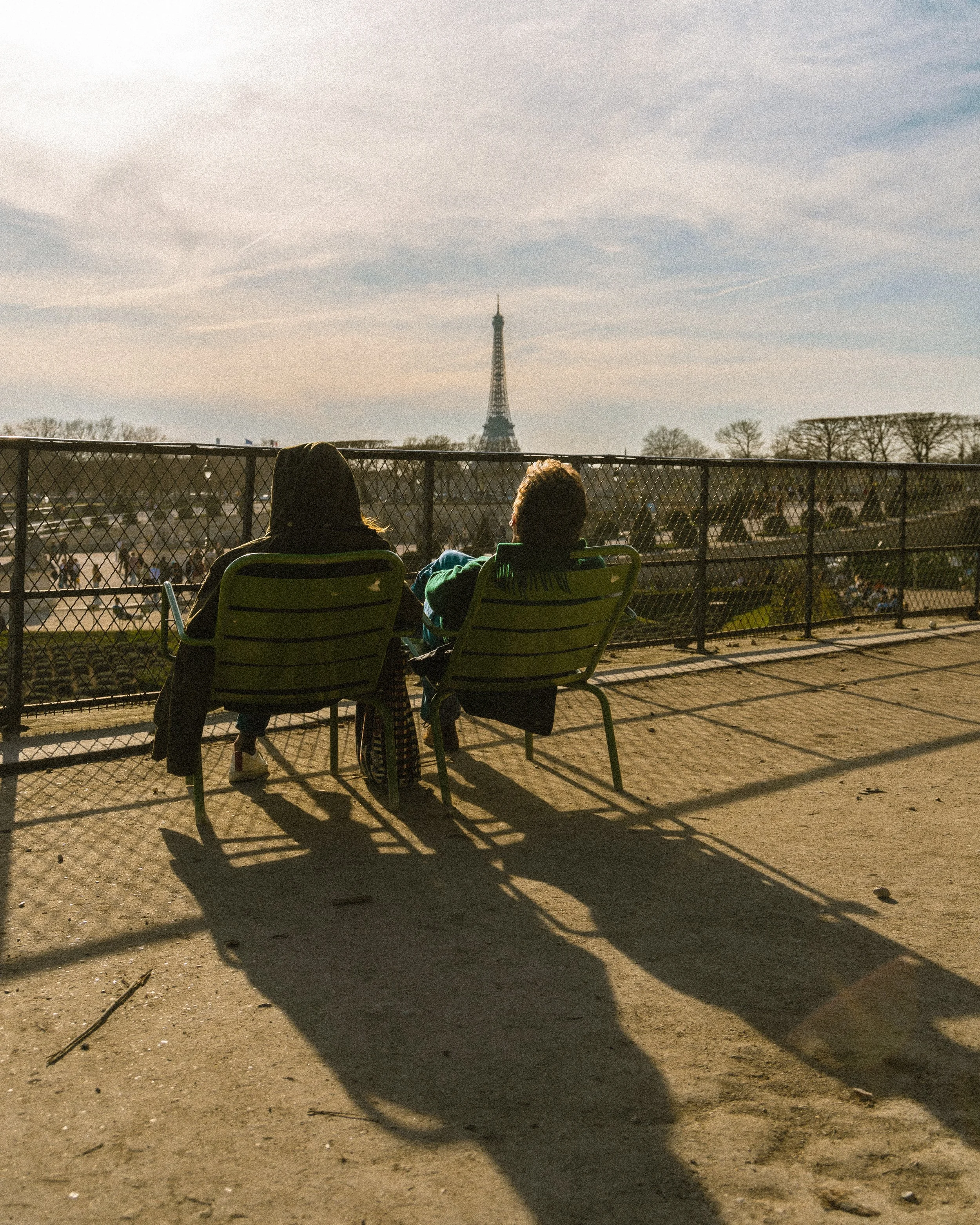
Located between the Louvre and Place de la Concorde, the Tuileries is the kind of place that photographs differently at every hour of day. The classic green chairs, the central fountain, the tree-lined allées — all of it works with the right light. Come at golden hour when the warm tones hit the gravel paths and the tourists thin out slightly.
Galeries Lafayette Rooftop
Free to access — just take the elevator to the top floor. The Galeries Lafayette rooftop gives you a 360° view of Haussmann Paris with the Eiffel Tower in the distance. Best shot: midday for the sharp Parisian light, or just before sunset when the golden hour skims the rooftops. No ticket required.
Place Vendôme
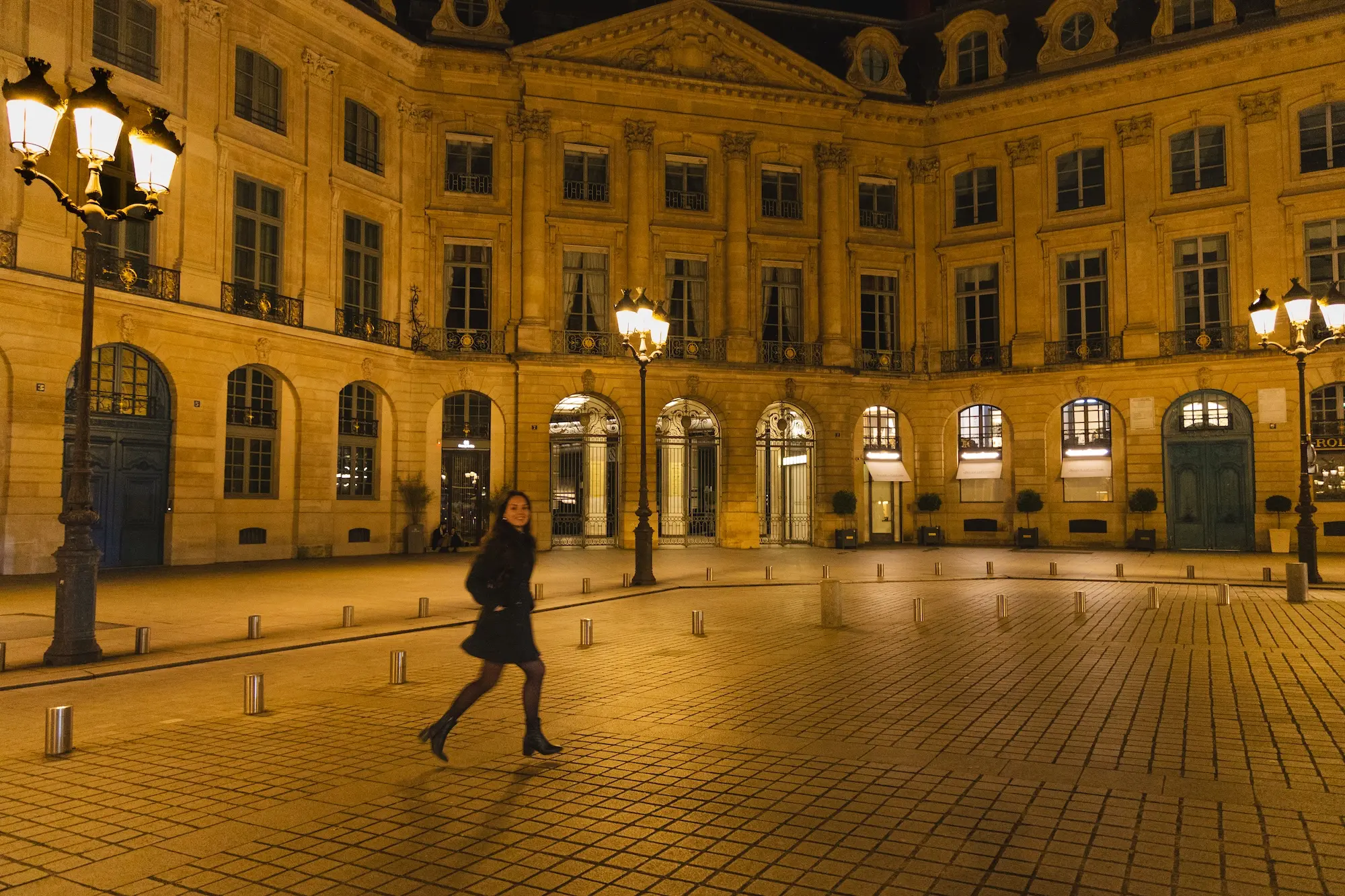
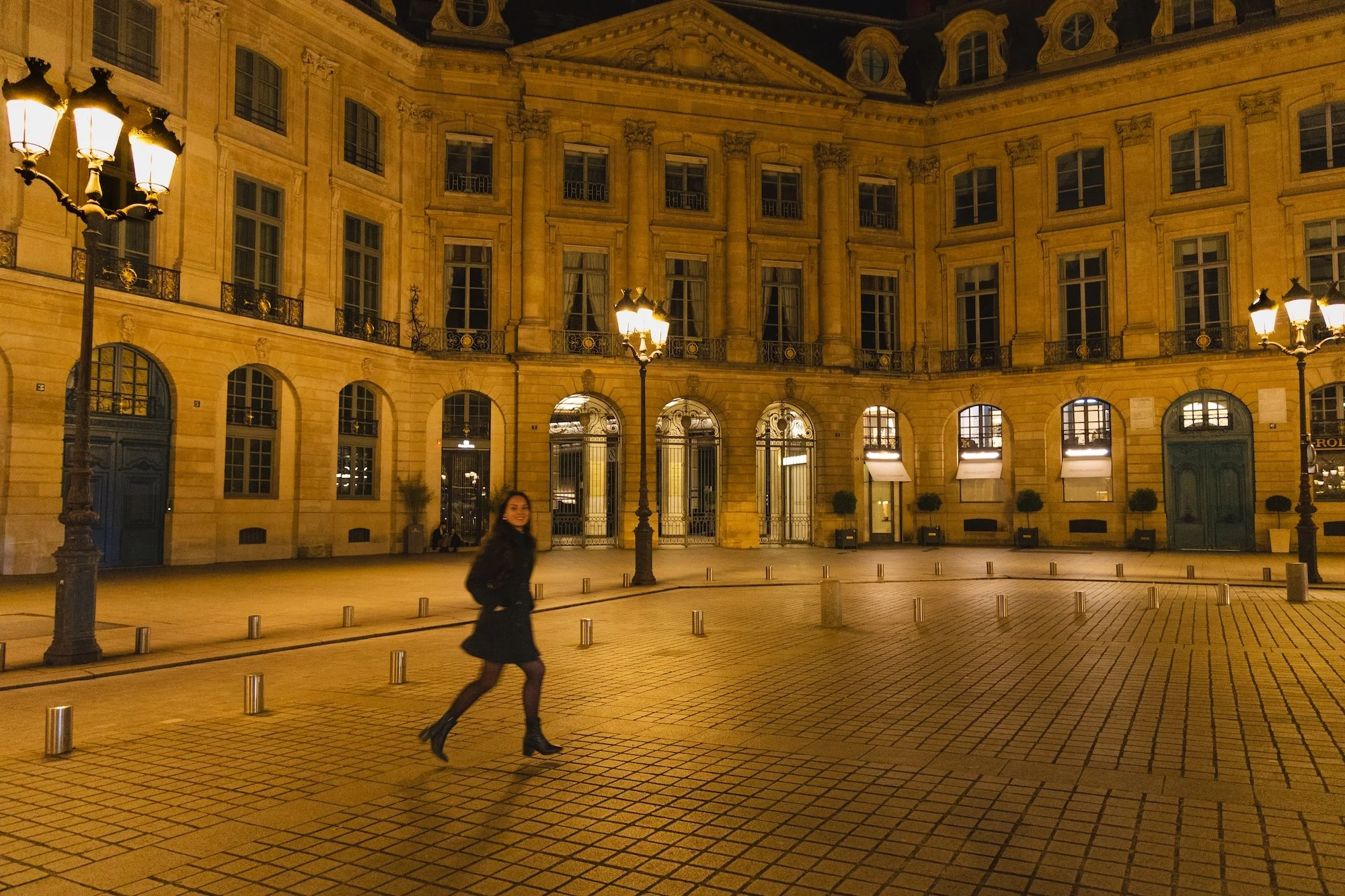
One of Paris’s most symmetrical squares, surrounded by luxury jewelry houses and topped with Napoleon’s column. At night, when the streets go almost empty and the square fills with warm artificial light, the compositions here become genuinely extraordinary. Wide angle against the column, or compressed telephoto to pull the facades together — both work well.
The Seine — Pont Alexandre III, Pont des Arts, Pont Neuf
The Seine runs past every major landmark in Paris. Pont Alexandre III is the most ornate — gilded lamps, stone cherubs, and a straight shot toward Les Invalides. Pont des Arts is smaller but atmospheric. Pont Neuf is the oldest bridge in Paris and the best spot for low-angle shots with water reflections in the foreground.
Early morning and late evening light on the river is special. The water turns gold before the city wakes up, and quiet again after the dinner crowds leave.
Reflections in Windows & Buses
Slow down and look around you — it gets hectic in Paris and most people miss the smaller moments. The reflections in wet pavement after rain, the distorted city in bus windows, the Eiffel Tower caught in a café mirror — these are the shots that make a Paris photo series feel layered rather than postcard-flat.
Palais Garnier
The Paris Opera House charges around $25 for a self-guided tour, and it’s worth every cent for photographers. The 1800s architecture inside is jaw-dropping — chandeliers, gilded balconies, the famous Grand Staircase. You’re allowed to photograph throughout. Come midweek when crowds are lower. Exterior shots work well from directly in front, or from the café on the upper level looking out.
The Random Side Streets
The best Paris photos often come from nowhere specific. Notice the lampposts at 3am, the sidewalk cafés at 7am before the chairs go up, the doorways with peeling paint, the vendor setting up a flower stall on an empty corner. Paris rewards patience and curiosity far more than it rewards planning.
Final thought: Despite being the most photographed city in the world, Paris still gives you space to make something personal. The difference between a tourist shot and a photograph is usually 10 minutes of patience and a willingness to wait for the right moment.