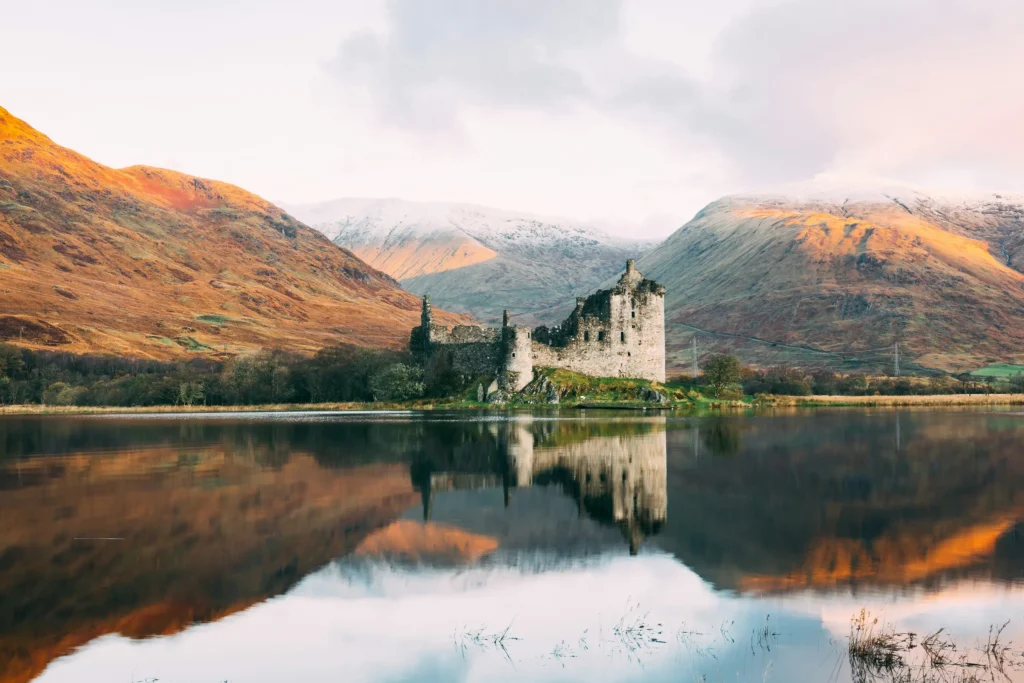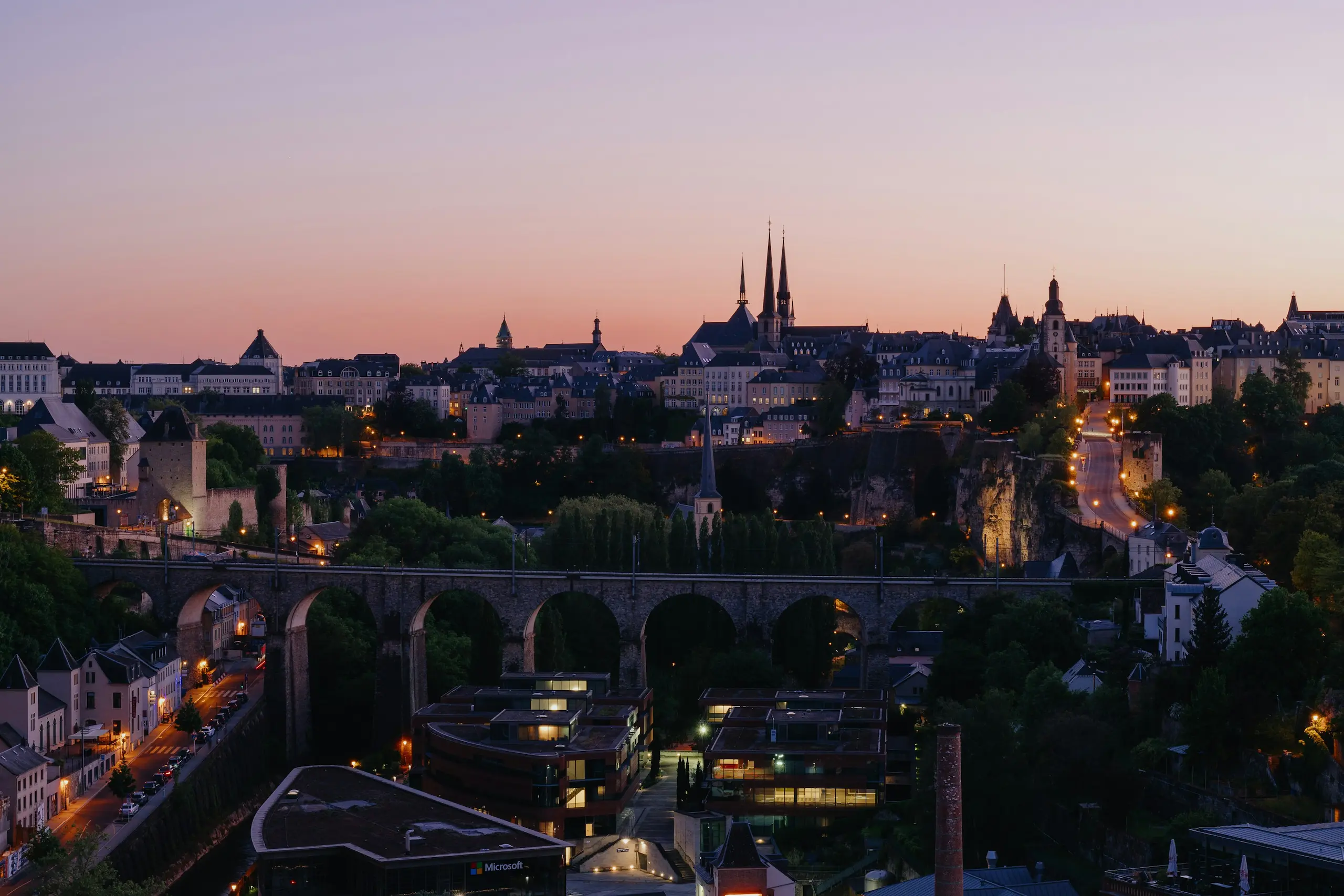
Luxembourg is smaller than Rhode Island, has a population of 660,000, and gets mentioned in travel planning primarily as a place to fly through rather than to. That’s a mistake. The country is remarkably beautiful — dramatic river gorge landscapes, medieval castle ruins on nearly every hilltop, a capital city with one of the most striking old towns in northern Europe — and because nobody comes specifically to see it, you largely have it to yourself.
Luxembourg City: The Gorge and the Grund
Luxembourg City is built on a plateau cut by two rivers (the Alzette and the Pétrusse), creating dramatic gorges that divide the city into upper and lower sections connected by bridges, lifts, and staircases. The Bock Casemates — a network of underground tunnels carved into the cliff — are the most visited attraction, but the real draw is simply walking the Chemin de la Corniche (called “Europe’s most beautiful balcony”) and looking down into the Grund (the lower medieval quarter).
The Grund itself — low-built, dense, along the river — has a completely different character from the upper city. Good restaurants, several bars, and the kind of neighborhood atmosphere that’s authentic rather than performed.
Free public transport: Luxembourg became the first country in the world to make all public transport free in 2020. Buses and trains within the country cost nothing. This includes transport from the airport to the city center. Factor this into your budget calculations.
The Müllerthal: Little Switzerland
The Müllerthal region in eastern Luxembourg is locally called “Little Switzerland” — forested sandstone rock formations, narrow gorges, waterfalls, and hiking trails winding through all of it. The European long-distance trail E1 passes through the region. The town of Echternach (the oldest town in Luxembourg, with a 7th-century abbey) is the main base. Half-day hikes in the Müllerthal produce genuinely striking scenery with minimal effort.
The Moselle Valley
The southeastern border with Germany follows the Moselle River through a wine-producing valley that most visitors to the Rhineland never look west toward. Luxembourg’s Moselle wines — mostly Riesling, Auxerrois, and Crémant (the local sparkling wine made by the Champagne method) — are excellent and almost unknown internationally. The wine route along the river connects a series of small villages with tasting rooms that see almost no tourist traffic.
Vianden: Castle Town
Vianden in the north is the most photographed town in Luxembourg — a medieval castle on a hill above a river bend, a village of half-timbered houses below it. The castle is well-preserved and worth the entrance fee. The télécabine (cable car) above the town gives a better view of the castle from above than any ground-level angle. Victor Hugo spent time in exile here and wrote about it extensively — there’s a small museum in the house he stayed in.