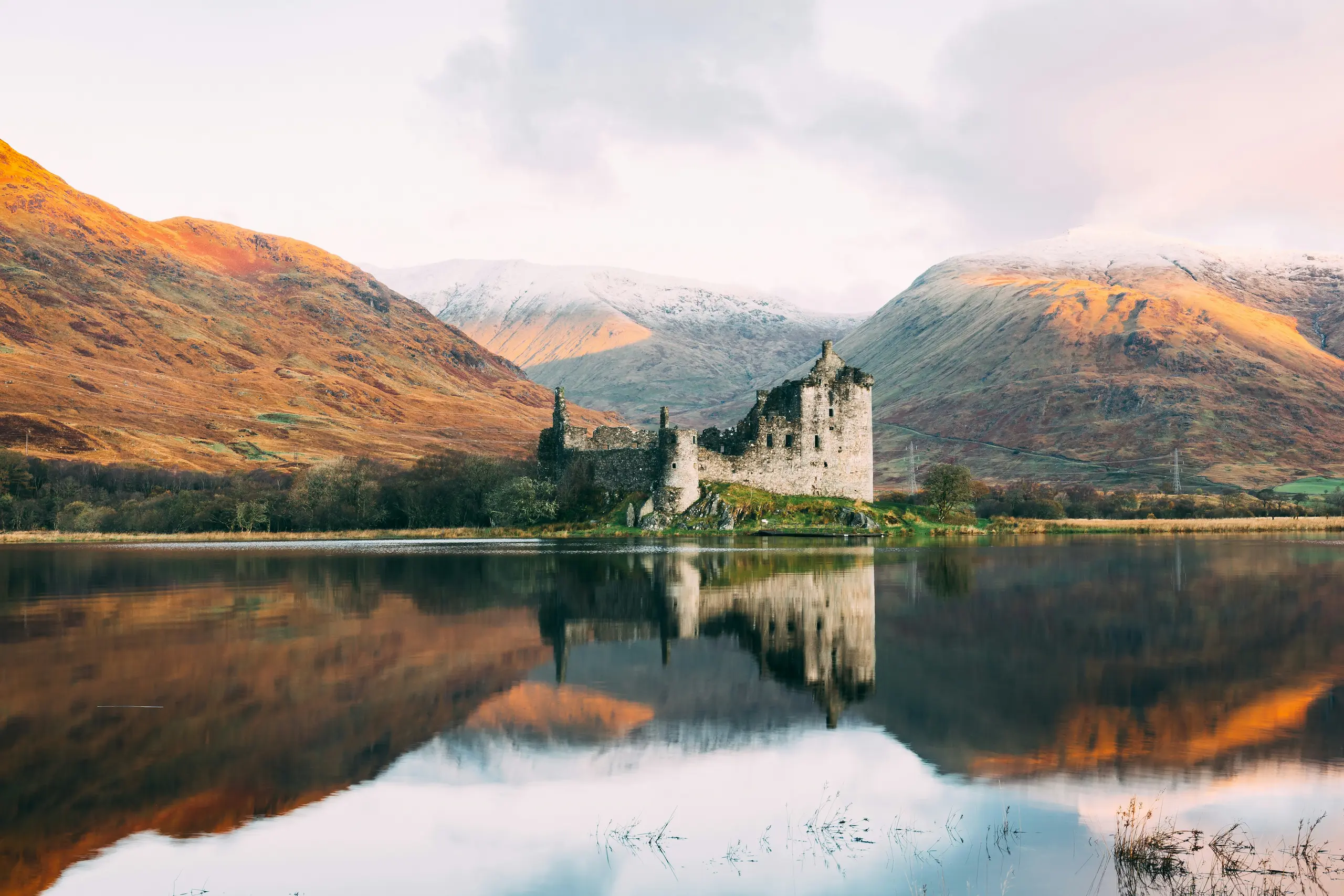
The Scottish Highlands are vast — over 10,000 square miles of mountain, loch, glen, and coastline, much of it accessible only by single-track road. That scale is what creates the hidden villages: places so remote from the main touring routes that they’ve developed without the tourist infrastructure that shapes everywhere else. One pub. One road in. The postmaster knows everyone by name. This is what most visitors to Scotland are actually looking for and rarely find.
Plockton: The Tropical Village
Plockton on Loch Carron is so sheltered by the surrounding hills that it has a microclimate mild enough to grow palm trees — in Scotland. The village is a cluster of whitewashed cottages around a sheltered bay, with sailing boats at anchor and otters occasionally visible on the shore. It’s accessible by train on the Kyle of Lochalsh line, which makes it one of the few genuinely remote Highland villages reachable without a car.
Kyle Line: The train from Inverness to Kyle of Lochalsh (passing Plockton) is one of the most beautiful rail journeys in Britain — lochs, glens, and Highland scenery for 82 miles. Book the outward journey in the morning and return in the evening from Kyle. Worth doing as a day trip from Inverness even without stopping.
Applecross: The Pass Worth Crossing
Applecross sits on a remote peninsula on the west coast, accessible via the Bealach na Bà — one of the highest mountain roads in Britain, with 20% gradients and views to Skye and the Outer Hebrides on clear days. The village has a celebrated pub (the Applecross Inn) that sources seafood directly from the local fishing boats. Arrive when the bar opens and order whatever the catch of the day is.
In summer a coastal road (open year-round, unlike the pass in winter) approaches from the north — the full loop from Loch Carron makes a perfect half-day drive.
Torridon: Mountains and Silence
The Torridon area has some of the oldest rock in Europe — Lewisian gneiss, over 3 billion years old — forming mountains that look completely unlike the rest of the Highlands. Beinn Eighe and Liathach are serious scrambles rather than walks; the views from the lower flanks are accessible to anyone. The village of Torridon itself is tiny (a hotel, a few cottages, a youth hostel) and surrounded by silence that is increasingly rare anywhere in Europe.
Kinlochbervie: The Far North
Near the northern tip of mainland Scotland, Kinlochbervie is a working fishing port — the kind of place where the industry hasn’t been replaced by tourism. The nearby beaches (Sandwood Bay, a 4-mile walk from the road) are among the most remote and beautiful in Britain. The landscape here — bone-white quartzite mountains, peat moorland, sea lochs — is the real north of Scotland.
Driving the Highlands
- Single-track roads: Standard throughout the Highlands — use passing places correctly, let oncoming traffic through, don’t park on verges
- Fuel: Fill up whenever you see a petrol station; gaps of 50+ miles without one are common in the far north and west
- Midges: The Highland midge (tiny biting insect) is worst in still, damp conditions from June–August — carry repellent or a head net
- Weather: Plan for all four seasons in one day; layer clothing and carry waterproofs regardless of the forecast