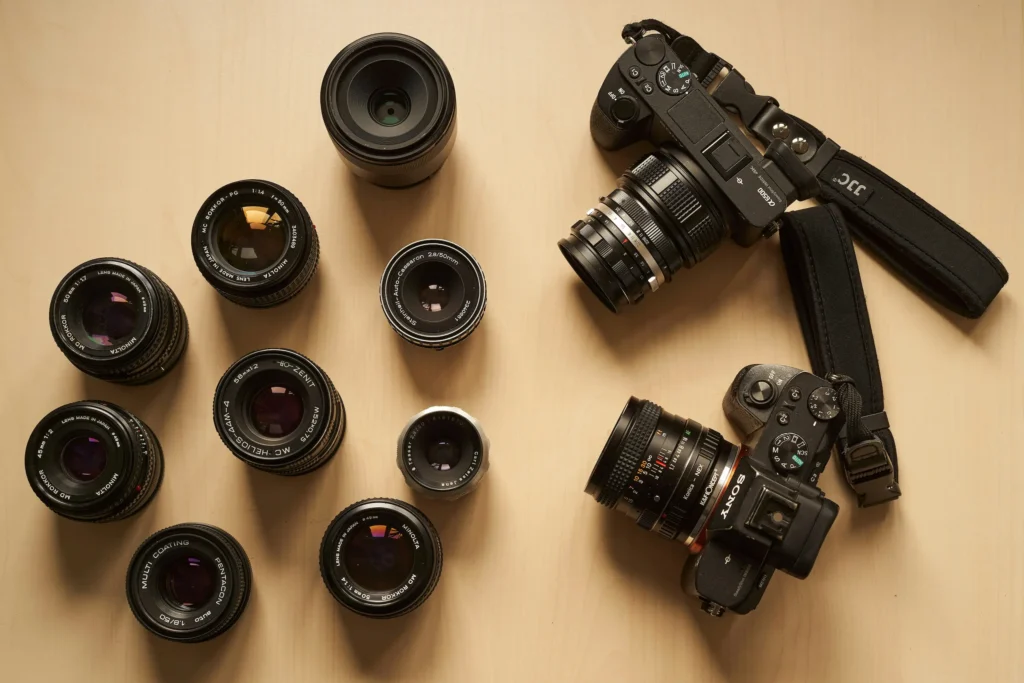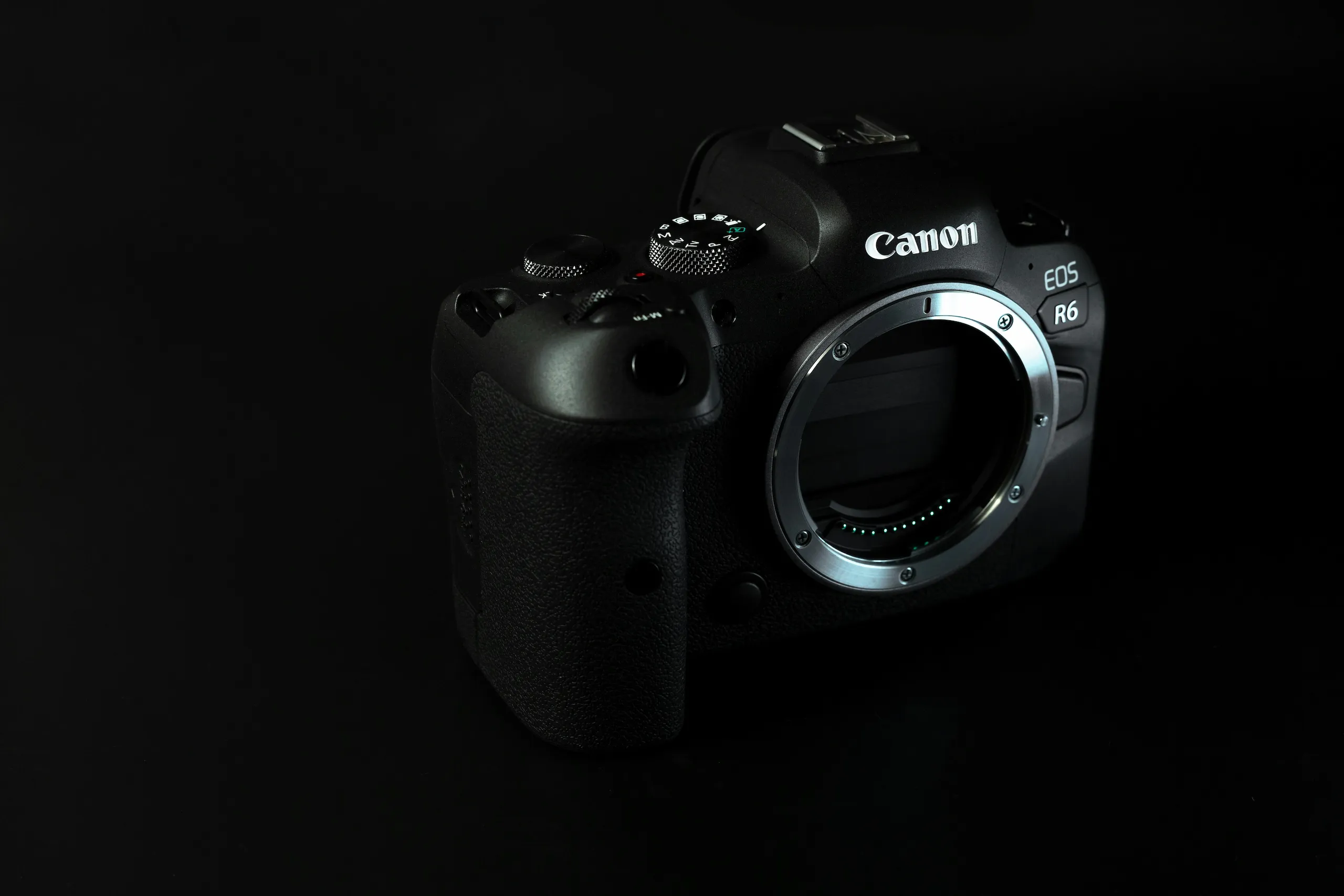
We shoot Canon — specifically the R6 Mark II and the Rebel 2000 on film — and we’ve tested Sony extensively. This is not a spec comparison. It’s a practical breakdown of how the two systems perform on the road, based on actual use rather than lab tests.
The honest conclusion first: both are excellent, and the system you should buy into depends on which factors matter most to your specific shooting. Here’s how they split.
Autofocus: Sony Wins, But Canon Is Close
Sony’s autofocus — particularly subject recognition and tracking on the A7 IV and A7C II — is the benchmark in the industry. Eye-tracking, animal detection, vehicle tracking: all class-leading. For travel portrait work, event shooting, and anything requiring fast tracking in unpredictable light, Sony’s AF is the more reliable system.
Canon’s Dual Pixel AF (on the R6 Mark II and above) is excellent and significantly better than what Canon was producing three years ago. For most travel scenarios — landscapes, architecture, street, slower-paced portrait work — you won’t feel the difference. The gap shows in fast-moving subjects and low-light tracking.
The real-world AF question: Are you photographing still subjects in good light? Both systems are indistinguishable. Are you photographing moving subjects in difficult light? Sony has a meaningful edge. Most travel photography falls in the former category.
Color Science and Jpeg Output
Canon’s color rendering — particularly skin tones and the warmth of its RAW files — is widely considered the more natural and pleasing of the two. Sony files fresh from the camera can look clinical; Canon files are closer to what you’d want the final result to look like. For photographers who shoot RAW and process everything, this matters less. For photographers who want good-looking files with minimal post-processing, Canon is the better starting point.
Lens Ecosystem
Sony has the deeper full-frame mirrorless lens library — more third-party options (Sigma, Tamron, Viltrox), more price points, longer time in market. Canon’s RF mount has fewer third-party options (Canon has been more restrictive with the RF mount license) but the native Canon RF lenses are extremely good. The 50mm f/1.8, 35mm f/1.8, and 85mm f/2 are compact, affordable, and optically excellent for travel use.
Ergonomics and Menu System
Canon’s menu system and button layout is more intuitive out of the box — this is consistent feedback from photographers who’ve used both. Sony’s menus are powerful but non-obvious; the learning curve is real. After a few weeks with either system you’ll adapt, but the first month with Sony requires patience that Canon doesn’t demand.
Which to Choose
- Choose Sony if: AF performance is critical, you shoot fast-moving subjects, you want the widest lens ecosystem, you prioritize video specs
- Choose Canon if: Color rendering matters, you value intuitive menus, you’re coming from Canon DSLR (lens adapters work well), you want excellent native RF lenses
- Already own one: Don’t switch unless the gap in a specific area is costing you specific shots. The switching cost (bodies + lenses) is rarely justified by the performance delta