The South of France presents extraordinary photography opportunities — warm light, diverse landscapes, and coastal towns that manage to be simultaneously dramatic and intimate. The key is timing, light, and patience. The postcard compositions are everywhere; the photographs worth making require something more considered.
Essential Pre-Shoot Information
Optimal season: Late May through September. June and early July offer balanced conditions — fewer crowds than August but full Mediterranean color. September is arguably the finest month: warm water, emptier beaches, and warm architectural tones as autumn light begins.
Lighting: Golden hour in the South extends longer than further north, appearing soft and diffused. The atmosphere often carries sea salt haze, creating honey-toned sunsets over cliffs and water that can’t be replicated in post-processing.
Recommended Gear
- Mirrorless or DSLR with strong dynamic range
- 24–70mm and 70–200mm lenses
- Circular polarizer (essential for midday water reflections)
- ND filter for long-exposure seascapes
- Lightweight tripod for elevated or dusk shots
- Drone — requires permits; restricted in Calanques National Park
The Calanques of Cassis
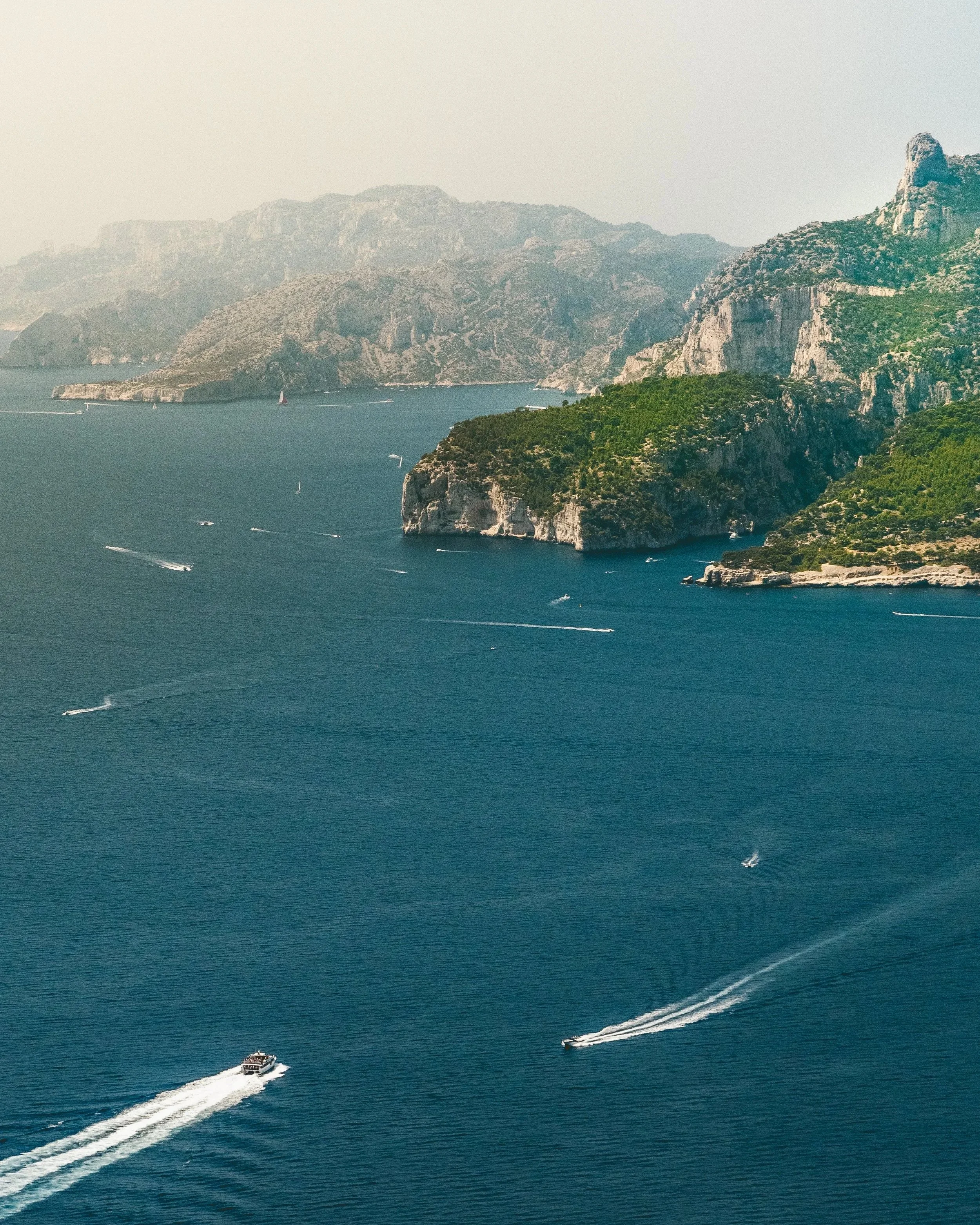
Limestone fjords between Cassis and Marseille — turquoise water against pale cliff walls. Morning to early afternoon light hits the water most effectively; the Calanques face generally south and east. Use zoom lenses from cliff-top vantage points for cinematic overhead perspectives framed through vegetation with swimmers below.
Access: Port Miou parking or the Cassis trailhead. Hiking access costs €10 cash at trailheads. Allow a full day for complete exploration.
Calanque d’En-Vau Beach
The most heavily photographed beach in the Calanques — bright umbrellas, pale limestone, emerald water. Arrive before 9am or after 6pm to minimize crowds. Shoot from elevated trails for the perspective that emphasizes human scale against the cliff formations. Water shadows function as compositional guides for both film and digital.
Provence Vineyards
Inland vineyards near Cassis and Bandol stretch toward the horizon in late afternoon light, creating gold and green tones that compress beautifully with a longer lens. Early evening light is the move here — 200mm+ focal length for that layered, cinematic softness that’s ideal for warm color grading.
Menton — The Pearl of France
Pastel-colored houses stacked on hillsides above turquoise water, and the most photographically intact town on the entire Riviera. Sunrise light from the shoreline captures building reflections in wet sand. The shoreline promenade and pier at sunset are the key spots. Use 35mm for wide context shots and 50mm for more cinematic portrait-style compositions.
Cap Canaille Lookout
France’s highest sea cliff, accessible via Route des Crêtes from Cassis. Multiple overlook points with westward-facing cliffs that receive optimal sunset light. Lightweight tripod and ND filters enable smooth water effects from this height. Safety consideration: cliff edges here have loose rock — genuine caution required, not just advisory.
Ollioules Medieval Village
This Toulon suburb has pastel-colored alleyways throughout its historic core and a village character that hasn’t been commercialized for tourism. Film photography captures the narrative quality here effectively — grain complements the atmosphere. Digital works well for low-light interior conditions.
Post-processing note: Preserve warm tones throughout editing — do not cool the shadows. The South of France has a specific Mediterranean warmth that over-correction destroys. Keep orange luminance high, preserve the haze, and let the colors breathe rather than forcing contrast.