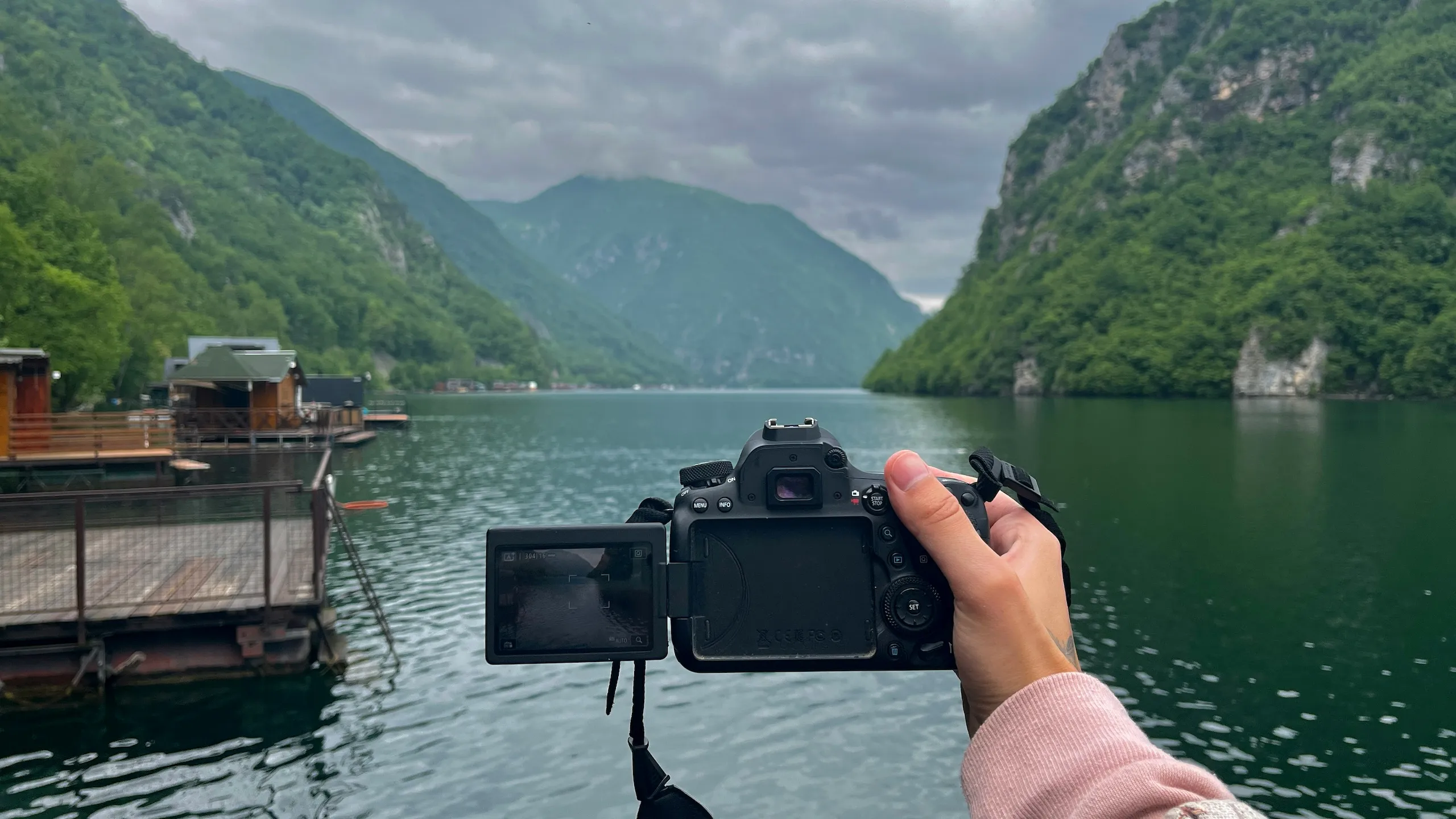
The travel industry spent decades perfecting the polished brand ad. Wide-angle drone shots over turquoise water. Perfectly lit couples on empty beaches. Voiceover copy that sounds like it was written by a committee. For a long time, that formula worked. It doesn’t anymore.
User-generated content — authentic photos and videos created by real travelers, guests, and creators — is now consistently outperforming studio-produced brand creative across nearly every performance metric. The data isn’t subtle. ROAS 3–4× higher. CPMs lower. Conversion rates up. And the gap is widening.
Why UGC Works in Travel
Travel decisions are high-consideration purchases. People research for weeks, sometimes months. They don’t trust marketing language — they trust other travelers. When someone sees a real person’s Instagram Reel at a hotel pool, walking the same breakfast buffet, standing at the same viewpoint they’re considering, something clicks that no brand ad can replicate: social proof at the moment of consideration.
The mechanism is trust transfer. The creator’s existing credibility with their audience transfers to your property. That’s worth more than any production value.
The core insight: Travelers trust other travelers. Your most powerful marketing asset isn’t your brand — it’s the authentic experience of someone who’s already been there.
The Performance Gap: What the Numbers Show
Across hospitality accounts we’ve worked with, UGC-style creative consistently outperforms polished brand ads on paid social. The pattern is consistent:
- Lower CPM — platforms favor content that looks native to the feed
- Higher click-through rate — authentic content generates genuine curiosity
- Better conversion — visitors arriving via UGC ads already have a warmer relationship with the property
- Lower production cost — content is captured at scale by creators rather than produced in single shoots
The production cost delta alone changes the math significantly. A single brand photography shoot might run $5,000–$15,000. A UGC campaign with five creators produces 20–30 pieces of usable content for a fraction of that cost, most of which can be repurposed across paid, organic, email, and web.
What Makes Good Travel UGC
Not all UGC converts. Content that feels staged — creators following a shot list too rigidly, using obviously scripted voiceover, or showing a product that doesn’t match the authentic experience — will underperform genuine content. The goal is authenticity with intention, not randomness.
The highest-performing travel UGC shares a few characteristics:
- First-person perspective — “Here’s what I actually found” rather than “this is a great property”
- Specific moments — the morning coffee view, the unexpected sunset, the detail nobody mentioned in the reviews
- Honest tone — minor observations or caveats build trust faster than pure promotion
- Short format with strong hook — 15–45 seconds on video; within the first 2 seconds, something worth watching
Building a UGC Strategy for a Travel Brand
The most effective UGC programs for travel properties aren’t ad-hoc. They’re systematic. Here’s the framework that works:
UGC Program Structure
- Identify 3–5 creator profiles that match your target guest demographic
- Host them with a loose brief — key experiences to capture, but no rigid shot list
- Secure usage rights upfront — paid, organic, email, minimum 12 months
- Request 5–10 deliverables per stay — mixed formats (vertical video, stills, stories)
- Run the content in paid social within 2 weeks while it’s fresh
- Repurpose across channels — website, email, OTA listings, Google Business
UGC vs. Influencer Marketing
These terms are often conflated but they’re meaningfully different. Influencer marketing is about reach — putting your property in front of a creator’s existing audience. UGC marketing is about content production — creating raw material for your own paid and organic channels.
Both have value, but they serve different goals. UGC creators don’t need large followings. They need to produce content that performs on your channels. A creator with 8,000 followers who shoots authentic, high-quality content is more valuable for a UGC program than a creator with 200,000 followers who produces generic lifestyle content.
The Rights Question
This is where many brands leave value on the table. Guest-generated content — the photos and videos your guests post organically — is technically the property of the creator. You can’t run it in paid ads without explicit permission. Build a simple process: monitor tagged content, reach out to creators whose content you want to use, offer a small incentive or credit in exchange for usage rights. Most creators say yes. The content pipeline is free, and it’s authentic by definition.
Start simple: Before investing in a full UGC program, audit your existing tagged content. You likely already have dozens of pieces of usable material — you just haven’t secured the rights to use them.