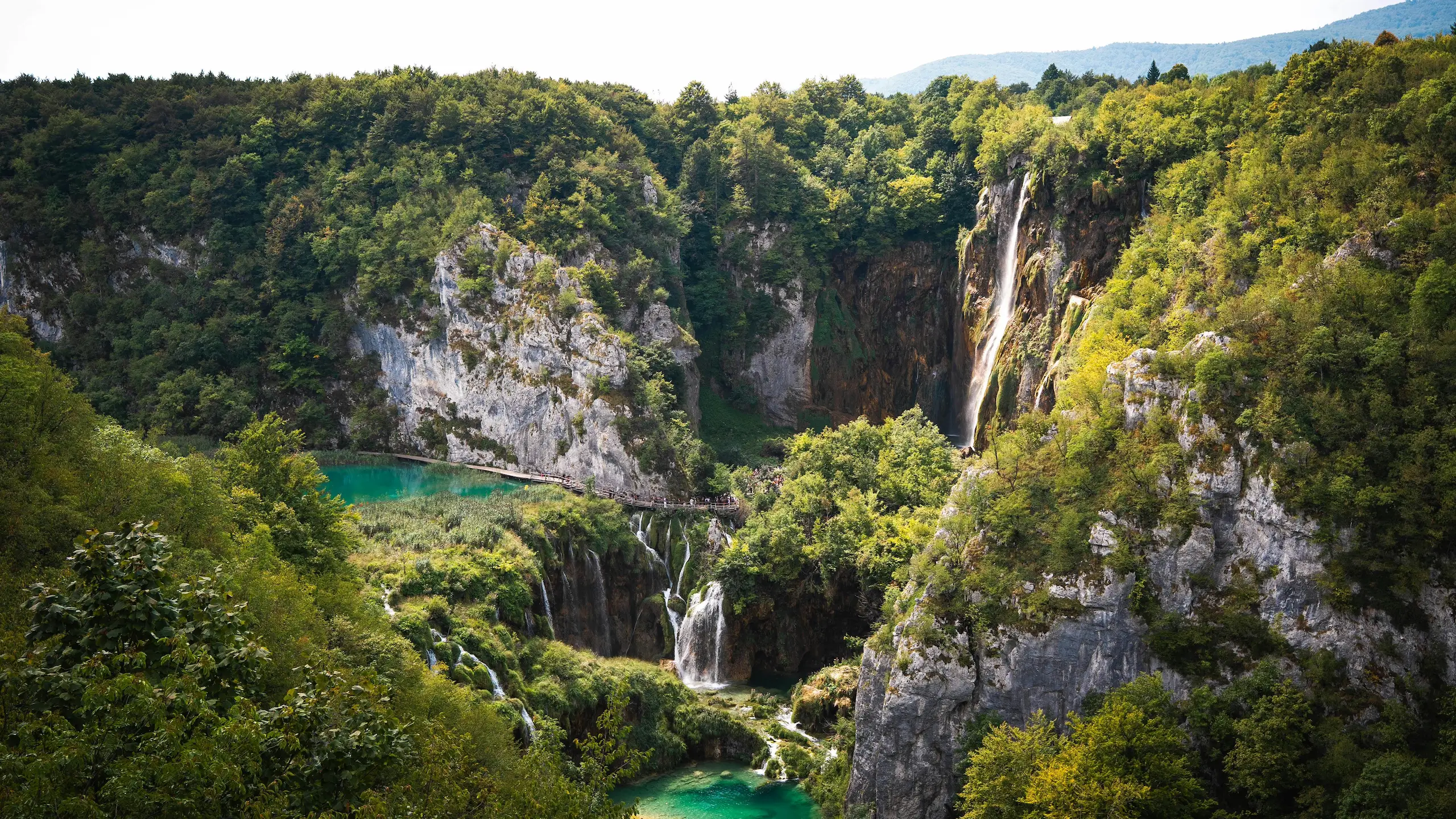
Plitvice Lakes is Croatia’s most visited national park — a UNESCO World Heritage site since 1979, with 16 terraced lakes connected by waterfalls, all flowing through a karst limestone landscape that turns the water an impossible shade of blue-green. It’s genuinely one of the most beautiful places in Europe, and genuinely overwhelmed by visitors in peak summer. What you do with that information determines whether your visit is memorable or miserable.
When to Go
The park gets around 1.5 million visitors per year. The majority arrive July–August. May, June, and September are meaningfully better — still busy, but the boardwalks don’t become gridlock. The best photography conditions are October–November, when the changing foliage combines with still-blue water and lighter crowds. Winter access is limited and some trails close, but the park in snow is otherworldly.
The real crowd hack: The park opens at 7am. Be at Entrance 1 or 2 by 7:15am and you’ll have the lower lakes and the Great Waterfall (Veliki Slap) largely to yourself for the first 90 minutes. By 9:30am, the tour buses have arrived. The difference in experience is dramatic.
Which Entrance and Which Route
The park has two entrances — Entrance 1 (closer to the lower lakes and the Great Waterfall) and Entrance 2 (upper lakes, more spread out). For first-timers, start at Entrance 1 and do Route A or Route B (the park’s marked loops). Route A is 3–4 hours and covers the lower lakes, the Great Waterfall, and a boat crossing of Kozjak Lake. Route B adds the upper lakes and takes 4–6 hours total.
The boat ride across Kozjak is included in the ticket and worth taking — it gives you a perspective of the lake’s full breadth that’s not available from the boardwalks.
The Photo Spot Everyone Misses
The iconic Plitvice image — the overlook of the cascading lower lakes — is shot from a viewpoint above Entrance 1. Almost everyone who takes it is doing so from a 45-degree angle to the left. Walk 30 meters to the right along the same viewing ridge and you get a wider, less obstructed frame with the Great Waterfall visible in the background. The difference in composition is significant.
Plitvice Practical Info
- Tickets: Book online at np-plitvicka-jezera.hr — park is often sold out daily in peak season
- Price: €10–€40 depending on season and route; children under 7 free
- From Split: ~2.5 hours by car; direct buses also available
- From Zagreb: ~2 hours by car; regular bus service from the main bus terminal
- Footwear: The wooden boardwalks can be slippery — trail shoes or light hikers are better than sandals
- No swimming: Swimming is strictly prohibited and actively enforced; the water preservation is why it looks the way it does
Where to Stay
Staying overnight inside or adjacent to the park is a meaningful upgrade. The park runs its own hotels (Hotel Jezero, Hotel Plitvice) — not luxurious, but the access to the park at opening and closing time when day-trippers are absent makes them worth the price premium. The village of Rastovača has private guesthouses for lower rates with slightly longer walks to the entrances.